 Contact: Salimetrics (USA)
Drop Date: May 2026
Not All Data Is Equal: Helping You Get the Best Data for Your Study
Rigor and Reproducibility Standards
Researchers are increasingly asked to justify sources of variability, assay performance, and the reliability of observed changes during peer review. Yet the capabilities required to answer those questions are not consistently available across laboratories. While most researchers invest heavily in study design and analysis, laboratory selection is often treated as an operational decision rather than a scientific one. In practice, however, the laboratory helps determine what the data can support analytically, interpretively, and translationally.
This bulletin updates our 2019 bulletin, What Makes a Saliva Lab High-Quality? The core attributes of quality still matter, but they are no longer sufficient. As expectations for rigor, reproducibility, and defensibility have advanced, researchers require laboratories with demonstrable capability.
In our 2025 bulletin, Is It Meaningful?, we emphasized the importance of stronger analytical methods, including the Reliable Change Index (RCI), for evaluating individual-level change. The same principle applies here: stronger laboratory execution reduces avoidable variability and improves the interpretability and reproducibility of results. Those limitations generally become visible only during analysis or peer review after all of the hard work has been done.
This bulletin therefore sets out a minimum specification for expert saliva testing laboratories. Because Salimetrics is an active provider of saliva testing services, this specification is offered as a transparent statement of the capabilities required to support defensible salivary bioscience research. It is intended to be applied independently of provider selection. Researchers should expect these capabilities from any laboratory they engage with and should use this specification to evaluate laboratory performance.
Minimum Specification for Expert Saliva Testing Laboratories
Saliva is a complex biological matrix, and the quality of what it reveals depends critically on how it is handled. Study design determines what you are asking; laboratory practice determines whether the answer you get is real. Operational rigor at the bench prevents the avoidable noise, drift, and interpretive ambiguity that erode data quality before analysis begins.
The seven criteria below define this specification. They are not aspirational benchmarks, but the practices required for results to be precise, comparable, and analytically defensible.
Not all laboratories meet this specification, and the differences are not cosmetic. These criteria address measurement precision, longitudinal consistency, and workflow control. They are not independently sufficient. Rigor is cumulative, and partial adherence leaves gaps that study design alone cannot compensate for. All seven must be met simultaneously.
What follows defines each criterion in turn, providing a practical basis for evaluating laboratory capability. Methodological quality at the laboratory level is not separable from scientific quality at the study level—what happens at the bench shapes what you can defend under peer review.
Criterion 1: Saliva Specific Calibration of Laboratory Equipment
Calibration must be saliva-specific and enforced before results are released.
Why this matters: Saliva assays operate at lower concentrations than blood-based assays and are more sensitive to small sources of technical variability. Saliva-specific calibration ensures that observed differences reflect biology rather than instrument drift.
An Expert Laboratory Must:
- Calibrate pipettes, plate readers, and critical instruments on defined, recurring schedules
- Apply calibration standards appropriate for saliva assays, not just general laboratory use
- Maintain calibration records that align with when study samples were analyzed
- Verify calibration status before data is accepted
- Treat calibration as a gating requirement, not a background compliance task
Criterion 2: Rigorous Quality Acceptance Criteria for Assay Results
Assay quality acceptance criteria must be predefined, documented, and consistently enforced for every run. Results are considered valid only when all criteria are met.
Why this matters: Quality acceptance criteria are where “right vs. mostly-right” gets decided. When defined in advance and enforced consistently, issues are identified while corrective action is still possible. This reduces downstream uncertainty, limits avoidable variability, and ensures results are defensible.
An Expert Laboratory Must:
- Require the standard curve (using all standards) to achieve an R² curve fit ≥ 0.99
- Require B/B₀ standard curves to overlay for multiple-plate runs
- Require high and low control concentrations to fall within expected ranges provided with the assay batch documentation
- Require that high and low control concentrations do not deviate across plates by more than 10% for multiple plate runs from the same batch
- Make Quality Acceptance Data available to be provided with results
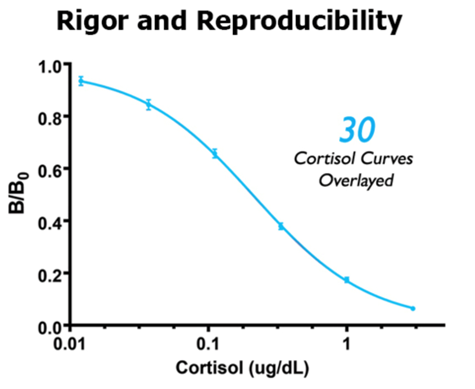
Criterion 3: Defined CV% Acceptance and Repeat Criteria for Precision
Precision must be predefined, measured, and enforced through assay-specific CV% acceptance criteria, with clear rules for repeat testing and resolution of discordant replicates prior to reporting results.
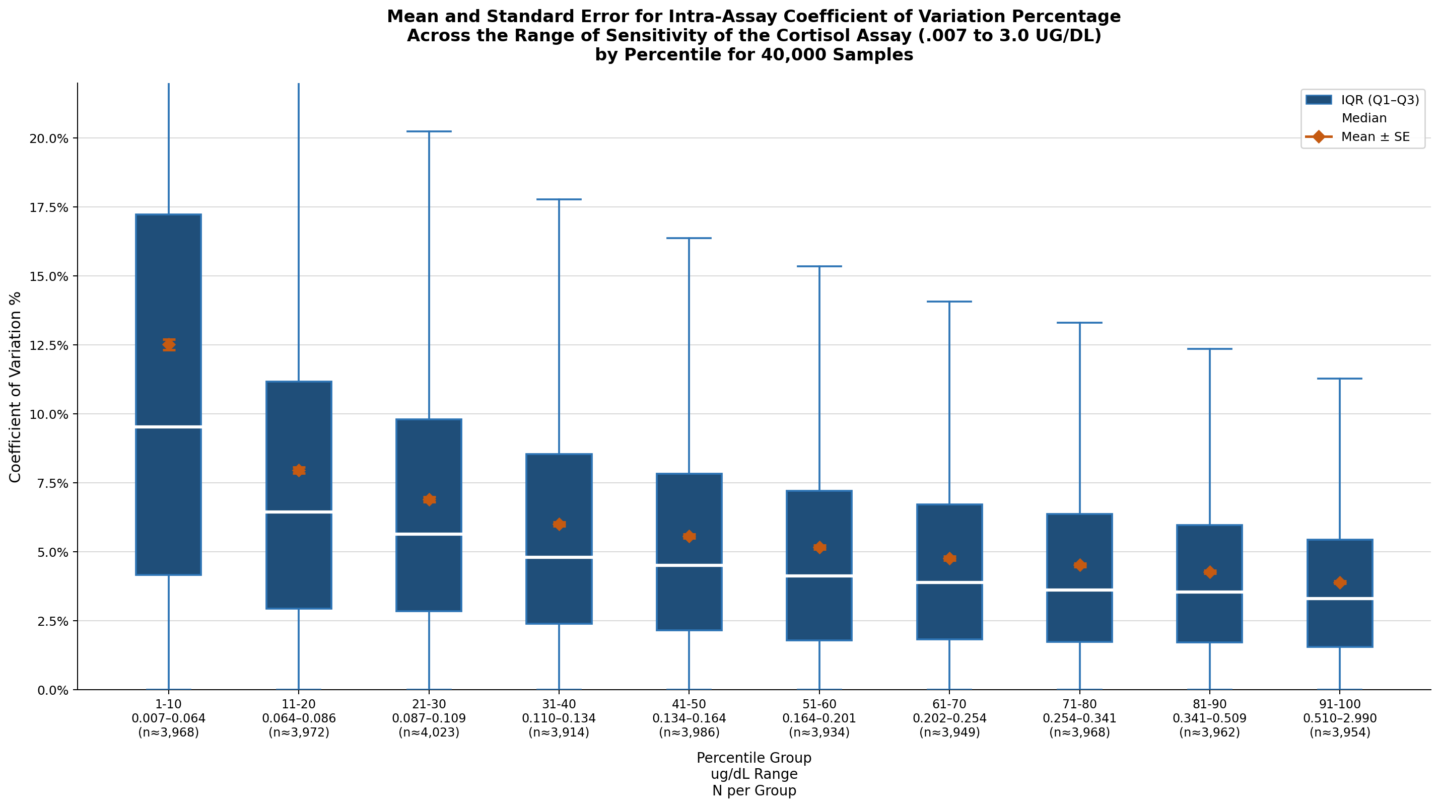
Why this matters: Predefined and consistently enforced CV% acceptance criteria ensure that replicate variability is identified and addressed while samples are still available. Precision preserves the study’s ability to detect real biological effects and prevents avoidable ambiguity in the dataset. When duplicate results produce a high CV%, it typically indicates that one replicate reflects the true value while the other has been affected by technical error. Expert laboratories treat discordant replicates as a resolvable quality event, rather than averaging disagreement into the reported result.
CV% acceptance criteria also ensure that laboratory variability remains materially smaller than the biological effects under investigation. For example, detecting a 10% biological effect with confidence generally requires laboratory variability of less than ~5%, improving the likelihood that results remain interpretable and defensible.
An Expert Laboratory Must:
- Define assay-specific CV% acceptance thresholds in advance for duplicate measurements
- Calculate CV% for all replicate results
- Flag results that exceed predefined CV% limits
- Require repeat testing when CV% acceptance criteria are not met
- Apply predefined rules to resolve inconsistent replicates before reporting results
- Document CV% values and repeat outcomes as part of the assay record
Criterion 4: Routine Saliva Workflow and Demonstrated Technician Competence
Saliva testing must be routine, and technician performance must be sustained as a baseline condition.
Why this matters: Routine saliva testing, performed by personnel with consistently maintained technique, becomes a source of stability rather than variability. Laboratories with sustained, saliva-specific discipline reduce avoidable noise and produce results that are more consistent, interpretable, and reproducible.

Saliva-specific competence is reflected in consistent handling of viscous samples, accurate small-volume pipetting, avoidance of bubbles, prevention of plate-position bias, and correct interpretation of quality control signals. These skills are straightforward but require continuous practice and reinforcement to maintain a level that supports reliable data.
An Expert Laboratory Must:
- Maintain a workflow cadence that keeps personnel continuously performance-ready
- Use personnel who routinely run saliva assays as part of standard operations
- Apply standardized saliva-specific procedures to ensure consistency across staff and over time
- Demonstrate and document technician competence on saliva-specific handling steps that materially affect results (viscous samples, bubble avoidance, small-volume accuracy, plate-consistent technique)
- Establish and execute corrective actions during testing when quality thresholds are not met (repeats, reruns, troubleshooting)
Criterion 5: Saliva-Specific Pre-Analytical Control and Sample Integrity Rules
The laboratory must define, document, and enforce saliva-specific sample integrity rules from receipt through testing.
Why this matters: Pre-analytical variation is a meaningful source of avoidable noise in saliva testing. When sample integrity rules are clearly defined and consistently enforced, researchers can trust that results reflect biology rather than handling artifacts. This reduces unexplained variability and strengthens the defensibility of the data.
By standardizing temperature exposure, thawing and mixing, limiting freeze–thaw cycles, and optimizing preparation, expert laboratories reduce handling-driven variability and produce results that are more consistent and interpretable.
An Expert Laboratory Must:
- Define and enforce receiving requirements (temperature condition on arrival, acceptable transit windows, and rejection criteria)
- Apply standardized storage and handling conditions appropriate for saliva biomarkers, not generic defaults
- Track freeze–thaw history and other integrity-relevant events at the sample level
- Use standardized thawing, mixing, and preparation procedures that are saliva-appropriate and consistently applied
- Document any handling deviations and their resolutions before results are released
Criterion 6: Longitudinal Consistency Across Plates, Runs, and Batches
Comparability across plates, runs, and reagent batches must be maintained and verified so that results remain consistent over time.
Why this matters: Longitudinal findings depend on comparability across time. Without enforced consistency, non-biological variation can accumulate and be misinterpreted as biological change.
DHEA-S High-Level Quality Control Remains Stable Across Consecutive Assay Batches
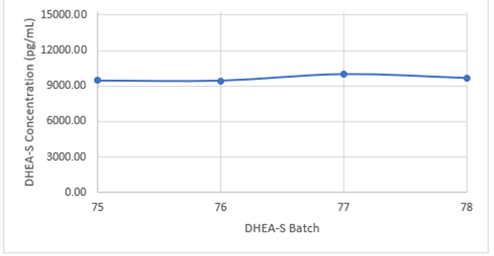
Standardized controls and documented comparability prevent drift from entering the dataset and ensure that observed differences reflect true biology rather than assay variation.
An Expert Laboratory Must:
- Standardize plate setup and run procedures that preserve comparability across time
- Run defined controls on every plate and reviews them for plate-to-plate consistency, not only within-plate acceptance
- Verify batch-to-batch consistency using predefined comparability rules when new batches are introduced
- Maintain traceability so each reported result can be linked to its plate/run and control/batch identifiers
- Apply predefined interventions when comparability thresholds are not met (hold, repeat, rerun, or bridging procedures)
Criterion 7: Study-Aligned Collection Design and Validated Collection Methods
The laboratory provides study-aligned, validated, and standardized recommendations for saliva collection timing, method, device, and technique before testing begins.
Why this matters: Collection decisions shape the biology you can observe. When collection is standardized using methods that accurately capture the levels at the time of sampling, measured differences are more likely to reflect true biology rather than collection-method artifacts. This strengthens the confidence of the study findings.
Using research-designed collection methods reduces variability in timing, technique, and device handling across samples.
Passive Drool PSPs
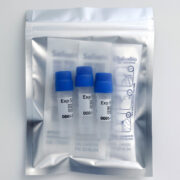
Recommended for Participants
Best for Sample Integrity
Best for Long Term Storage/Biobanking
Salimetrics Saliva Swab PSPs
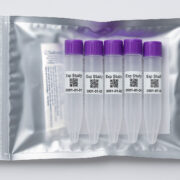
Available for participants of any age
Best for clean collection
Best for animal saliva collection
An Expert Laboratory Must:
- Align collection approach to the study’s biological question, time requirements, and target analytes prior to sample collection
- Recommend methods that are validated for the specific analyte(s) being measured
- Use passive drool as the reference method when feasible, and apply swab-based methods only when they are appropriate and validated for the target analytes
- Provide clear, study-ready instructions that standardize technique and reduce avoidable variability
- Identify and mitigate known collection-method biases that can shift measured concentrations
Making Your Choice
You have three practical options for testing your study samples: run them in-house, send them to a collaborator or university core lab, or partner with an expert saliva testing laboratory. Each option can generate data, but the process, consistency, and confidence in the results can vary.
For the most direct path to defensible salivary bioscience data, choose an expert laboratory like Salimetrics CoreLab+. Here, the seven criteria outlined in this bulletin are baseline operations that are built into every study, enforced before data is released, and sustained over time.
In this model, rigor isn’t something you manage, but something you embed into the lab’s processes and workflows, freeing your team to focus on the science with confidence in the data.
*Note: Salimetrics provides this information for research use only (RUO). Information is not provided to promote off-label use of medical devices. Please consult the full-text article.