 Contact: Salimetrics (USA)

When Your University Core Lab Closes
If you’ve recently received a notice that your institution’s core laboratory is suspending services, or worse, shutting down entirely, you’re not alone. Core laboratory closures are becoming an increasingly common disruption across academic research institutions.
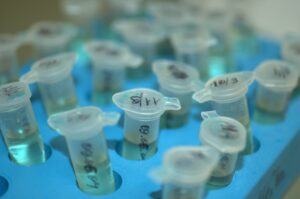
Across the United States, university core labs that provide essential bioanalytical services are facing mounting financial pressures. Reduced overhead recovery, post-pandemic budget shortfalls, shifting institutional priorities, and flat federal funding have all contributed to a wave of closures and service reductions that are leaving researchers scrambling mid-study.
For researchers who rely on core labs to process salivary biomarkers or dried blood spots (DBS), including cortisol, alpha-amylase, DHEA, melatonin, inflammatory cytokines, and immune markers, an unexpected closure can threaten longitudinal study timelines, compromise sample integrity, and create serious problems for grant compliance. The good news: you can take concrete steps to minimize disruption and keep your research on track.
At Salimetrics, we hear from researchers navigating exactly this situation with increasing frequency. What follows is practical guidance drawn from years of supporting study teams through analytical transitions, mid-study disruptions, and the often-overlooked logistical challenges of moving biomarker work from one setting to another.
Evaluate External Laboratory Options Before You Need Them
When you’re managing a study transition, the last thing you need is more uncertainty, and that’s exactly what a specialized commercial laboratory is built to remove. Unlike a university core lab, which is often stretched across departments, competing priorities, and shifting institutional funding, a dedicated commercial lab lives and dies by consistency: locked-in turnaround times, tighter validation standards, and scientists who do nothing but this kind of biomarker work day in and day out.
When evaluating an external lab, prioritize the following:
Assay Validation and Methodology
Confirm that the external lab uses the same assay platform or methodology your study was validated on. Switching from one assay type (e.g., chemiluminescence to ELISA) can introduce systematic variance that is nearly impossible to correct retrospectively. Ask for published or internal validation data, and confirm that assay kits and reagents are lot-controlled. Salimetrics publishes assay performance data for all of its salivary and DBS assay offerings and uses lot-controlled reagents across every run.
Collection Device Compatibility
If your study uses a specific saliva collection device, such as a passive drool tube, swab-based collector, or other oral fluid device, verify that your new lab has validated their assays on the same device. Salivary biomarker concentrations can differ meaningfully across collection methods, and cross-device comparisons within a longitudinal dataset are problematic. The same principle applies to DBS cards: not all cards have the same hematocrit correction factors or punch volumes. When in doubt, contact the laboratory directly before your next collection wave to confirm compatibility.
Quality Control and Reporting
Ask prospective labs whether they include internal quality controls (QCs) in every batch, whether they use intra- and inter-assay CVs to flag problematic runs, and how they handle samples that fall outside the assay’s reportable range. Good labs will provide transparent QC data with every results report. This level of documentation is increasingly expected by grant reviewers and journal editors, and it is something Salimetrics includes as standard practice.
Research Support
Commercial labs vary significantly in how much methodological guidance they offer. Some function as pure processing facilities; others provide scientific consultation, protocol review, and grant-budget support. If you are mid-study or preparing for a grant renewal, a lab that can speak to the methodology and help you document the transition in a way that satisfies your program officer is worth prioritizing. Salimetrics’ scientific support team works directly with PIs and study coordinators on exactly these kinds of questions, at no additional charge.
Longevity and Track Record
It’s a common assumption that businesses are the less stable option, that they start up, get acquired, pivot, or close, while universities are viewed as the safer, more permanent choice. What’s happening across academic core labs right now tells a different story. Salimetrics has operated under the same name, with the same scientific focus, for almost 30 years, supporting research through funding cycles, institutional restructuring, and everything else, without interruption. That kind of continuity isn’t a marketing claim; it’s simply our history, and it’s exactly the kind of stability a multi-year study needs from its analytical partner.
We’re Here When You Need Us
If there’s a silver lining to everything happening with core labs right now, it is this: it is prompting researchers to think more carefully about bioanalytical continuity as a core component of study design. Going forward, consider building the following into any new protocol:
- Identify a primary and a backup laboratory at the outset, and specify both in your data management and sharing plan
- Write IRB language that describes your lab by type and methodology, not by institutional name, so a transition does not automatically trigger a full amendment
- Budget a contingency line item for potential laboratory transitions, particularly in multi-year grants
- Ensure that at least one member of your study team is familiar with the analytical methods in enough depth to evaluate alternative providers
If you’re facing this and not sure where to start, reach out. We’re glad to help you think through next steps, review your options, and make sure your science doesn’t miss a beat.
*Note: Salimetrics provides this information for research use only (RUO). Information is not provided to promote off-label use of medical devices. Please consult the full-text article.